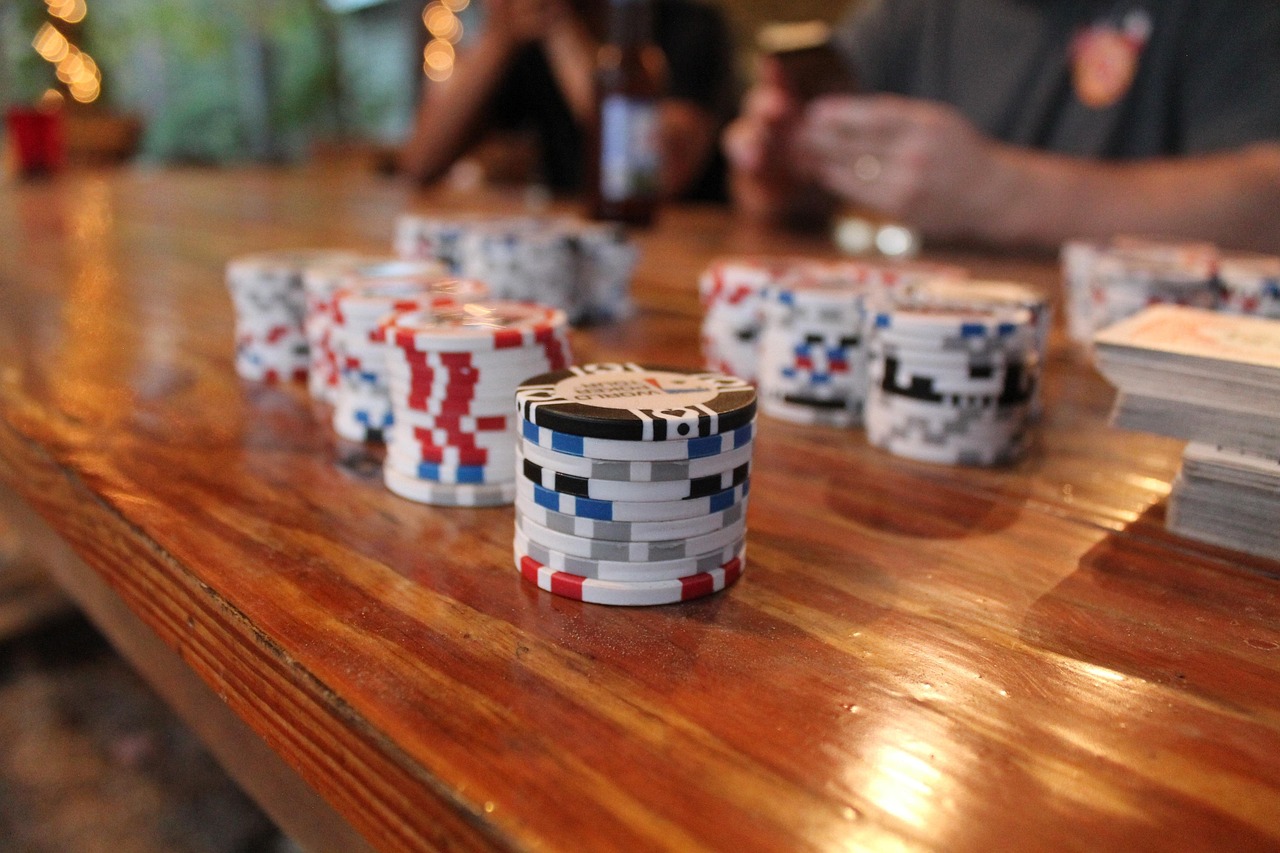
Every gambler has heard the saying: the house always wins. It's true, but only in the aggregate. Casinos don't profit because every single player loses — they profit because they hold a small mathematical edge over millions of bets. Understanding that edge, and knowing where it shrinks, is what separates a tourist from someone who actually lasts. Whether you're spinning slots, grinding poker tables, or hunting value in sports betting, the fundamentals are the same. Let's talk about them honestly.
House Edge Explained Without the Jargon
The house edge is the casino's built-in profit margin, expressed as a percentage of every bet you make over the long run. A 5% edge on a slot machine means that for every $100 you cycle through, the machine theoretically keeps $5. That doesn't mean you'll lose $5 every session — variance is a wild animal — but over thousands of spins, your results will drift toward that number.
Where it gets interesting is how dramatically that edge varies by game: It is also worth checking mahjong way 1 before deciding.
- Blackjack with basic strategy: roughly 0.5% house edge
- Baccarat (banker bet): about 1.06%
- European roulette: 2.7%
- American roulette: 5.26% (the double zero kills you)
- Video poker (Jacks or Better, perfect play): 0.46%
- Penny slots: often 8% to 12%
If you play blackjack with basic strategy at 0.5% and the person next to you hammers a penny slot at 10%, your money is going to last roughly twenty times longer. That's not luck — that's math.
Slots: Volatility Is the Real Story
Slot machines get a bad rap, and mostly deservedly so. But the picture is more nuanced than "slots are rigged." They're not rigged in the sense of being unfair — the Random Number Generator (RNG) is independently audited, and payback percentages are disclosed in many regulated markets. What they are is high-volatility and high-edge.
The two numbers you need to understand are RTP (Return to Player) and volatility:
- RTP is the theoretical payback over millions of spins. A 96% RTP means you'll lose roughly $4 per $100 wagered on average.
- Volatility describes how that payback is distributed. Low-volatility slots pay small, frequent wins. High-volatility slots (like Book of Dead or Money Train) can go hundreds of spins without a payout, then hit a massive win.
A practical tip: check the slot's RTP before you play. Regulators like the UK Gambling Commission require RTP disclosure, and sites like the manufacturer's help pages often list it. Slots ranging from 96% to 97%+ are the player-friendly end of the spectrum. Anything under 94% is rough. Also be aware that some operators run the same slot at different RTP settings depending on the market — the same Book of Ra might pay 95% in one jurisdiction and 87% in another.
Poker: The One Game Where You Can Have a Real Edge
Poker is the outlier. The casino or poker room takes a rake (typically 5% of the pot, capped at $3 to $5 in cash games), but you're not playing against the house — you're playing against other people. That means a skilled player can consistently win, because the fish are the ones subsidizing everyone else.
The fundamentals haven't changed in decades, even if solvers have optimized everything to death:
- Play tight and aggressive in position. Fold marginal hands from early seats. Open wider on the button.
- Understand pot odds. If you're getting 3-to-1 on a flush draw (roughly 4-to-1 to hit on the next card), the call isn't automatically correct — implied odds matter.
- Identify the fish before you try to bluff. Bluffing calling stations is burning money.
- Manage your bankroll. Thirty buy-ins for cash games, a hundred for tournaments. Anything less and variance will ruin you.
There's a reason most professional poker players don't grind slots. The skill edge in poker is measurable and persistent.
Sports Betting: Value Over Picks
Sportsbook operators typically build a 4% to 8% margin into their lines, but line shopping can shave that down to 2% or less. The trick isn't picking winners — anyone can pick winners. The trick is finding bets where the implied probability is lower than the true probability.
A concrete example: if a bookmaker prices a team at +150 (implied 40%) and you genuinely believe their win probability is 48%, that's a value bet, even though you'll lose more often than you win. Long-term profit comes from grinding those edges and avoiding parlays, which compound the house's margin with every leg you add.
Closing line value is the best predictor of long-term betting success. If you consistently beat the closing odds, you're doing it right — even during a losing month.
Bankroll Management Is the Real Skill
Ask any seasoned gambler what separates winners from busts, and they'll tell you it's not picking the right game. It's surviving long enough to let the math work. Session limits, loss limits, and unit sizing matter more than any hot streak.
A simple framework:
- Define a monthly gambling budget — money you can genuinely afford to lose.
- Break it into units (1% to 2% per bet for casual betting, 5% for high-confidence bets).
- Never chase losses with larger bets. Doubling up after a loss is the fastest path to zero.
- Log your results honestly. Casinos track every wager; you should too.
The players who take it seriously treat it like a hobby with a cost, not a retirement plan. The rare few who treat it like a business have spreadsheets and stop-losses.
Final Thoughts: Play the Game You Can Actually Win
The casino isn't evil and it isn't unbeatable — it's just a business with a margin. Your job is to minimize that margin, play games where skill matters, and understand that any given session is a small sample of a very long run. A 96% RTP slot is a coin toss with a slow leak. A poker table against weak opponents is a genuine opportunity. Sports betting at a sharp book is a grind with real edge.
Pick the game. Learn the math. Control the size of your bets. And never forget that the house edge only applies to the player who doesn't understand it.